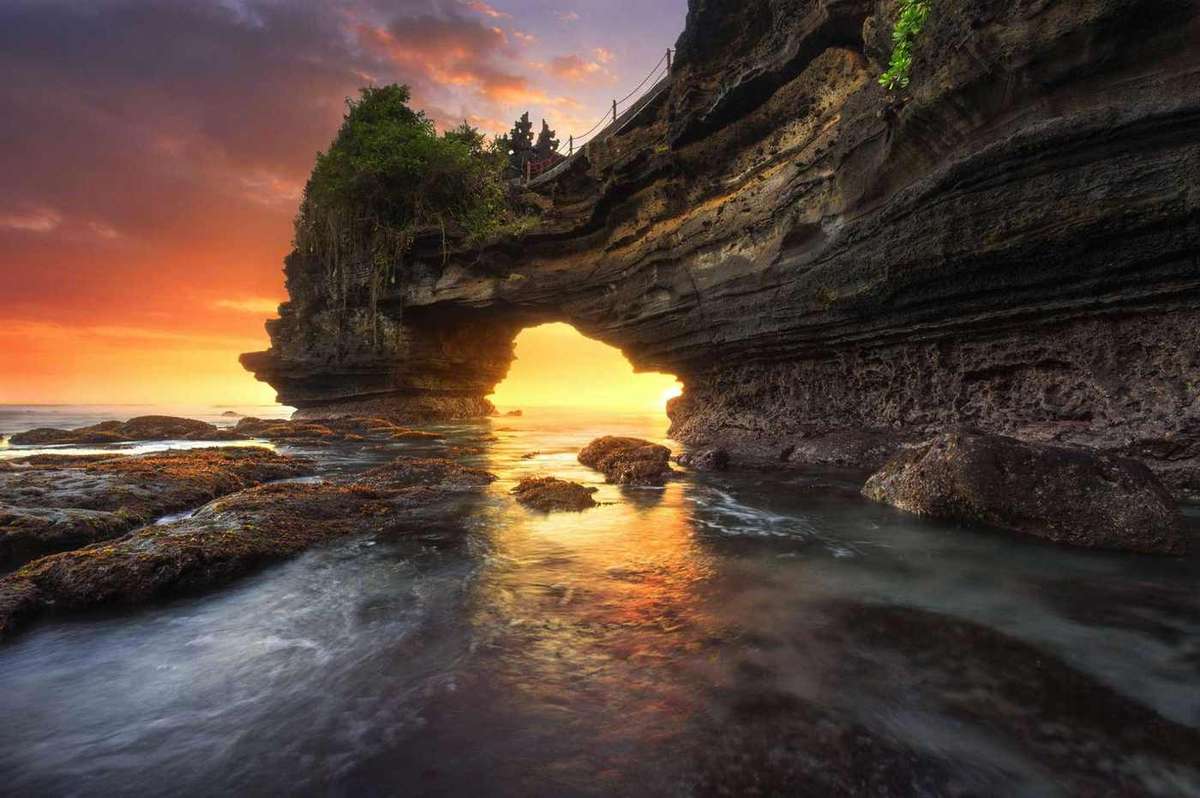
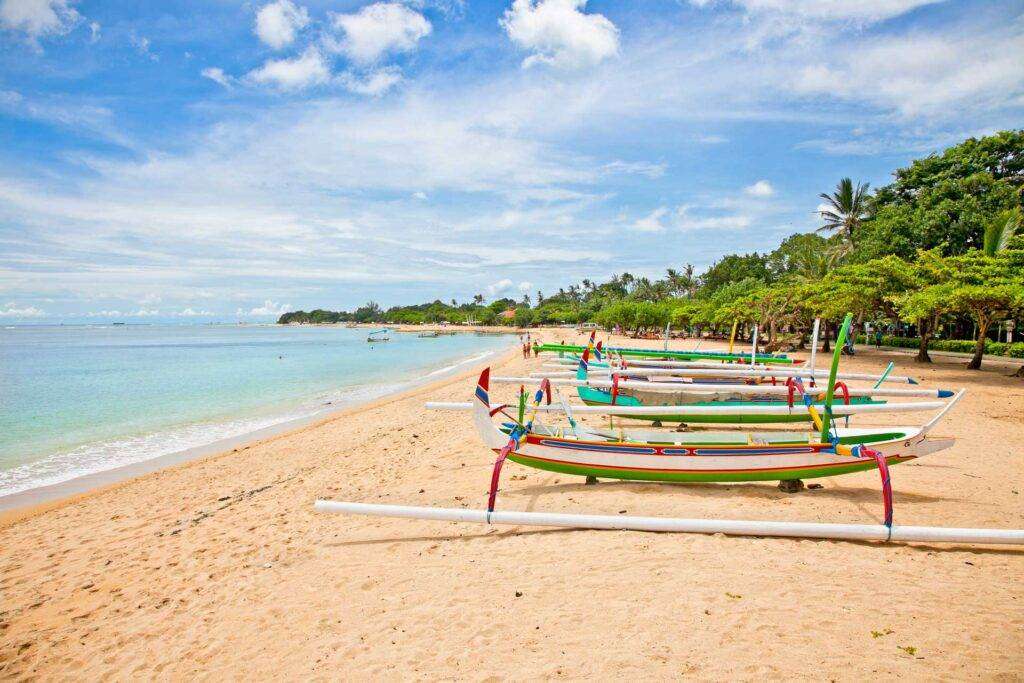
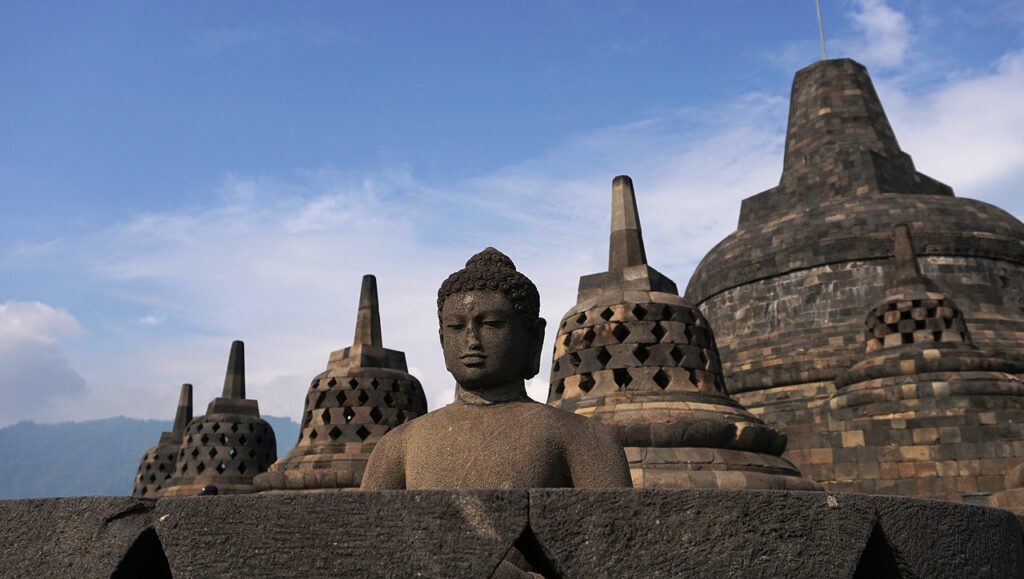
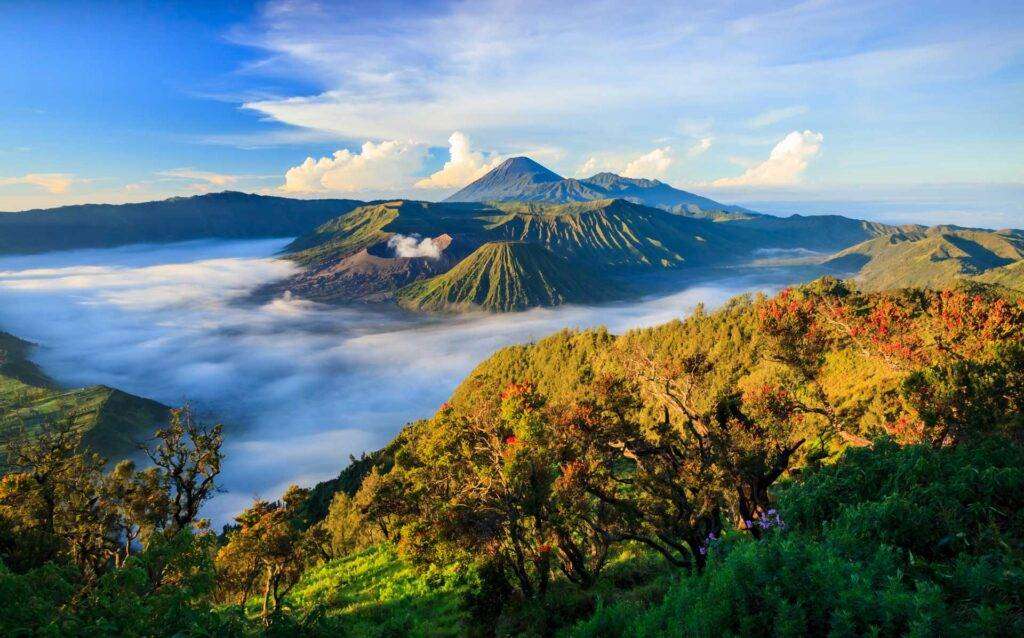
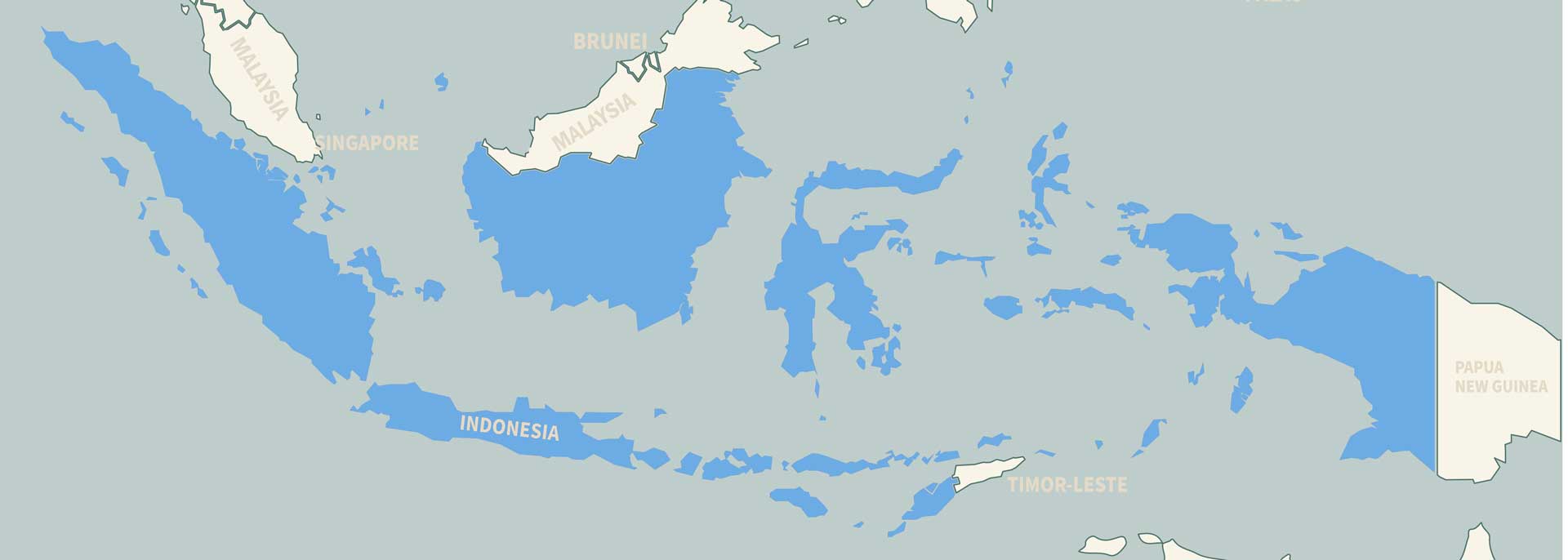
The Republic of Indonesia counts 17,504 tropical islands, more than any other nation, most of them edged in pale sand. A good number have no residents at all and a few have never been given a name.
The chain sits astride the equator, wedged between the Asian and Australian landmasses and between two oceans, the Indian to one side and the Pacific to the other. End to end it measures what the United States does from San Francisco to New York, or what separates London from Moscow. Its people number over 215 million and belong to upwards of 200 ethnic groups, with Bahasa Indonesia serving as the national language.
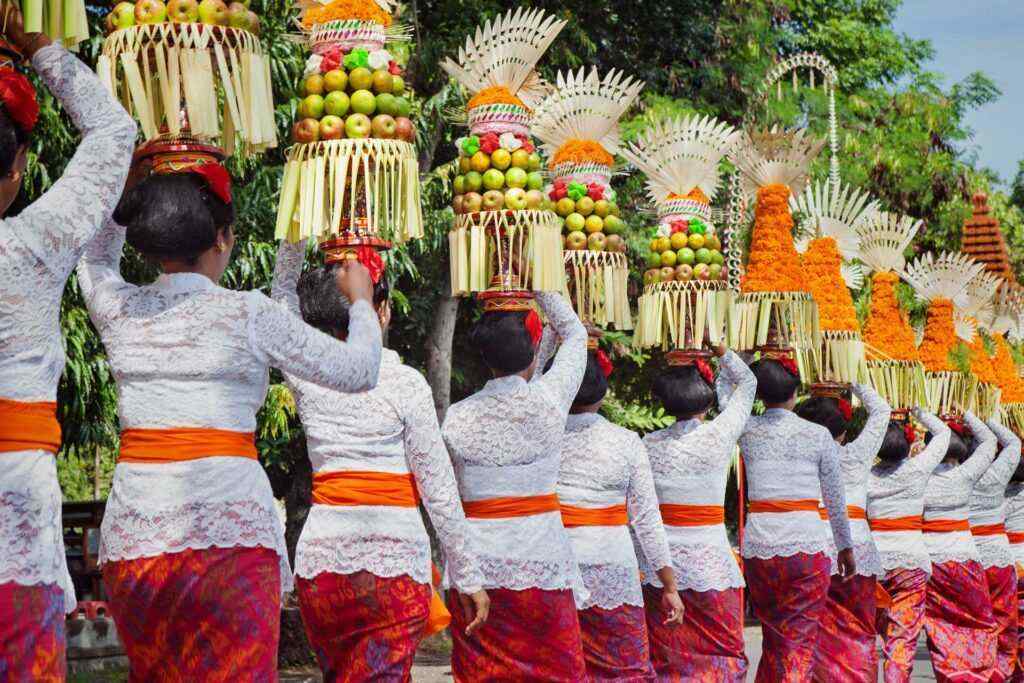
The names travellers know best are Sumatra, Java, Bali, Kalimantan (once called Borneo), Sulawesi (once Celebes), the Maluku Islands, long known as the Moluccas and the original Spice Islands, and Papua. Bali carries a reputation as the finest island resort going, with its culture, its coastline, its dance and its music. Far more of the country stays off the usual routes, though: mountains to look at, forest to walk, surf to ride, and clear water where dugongs, dolphins and big manta rays pass by.
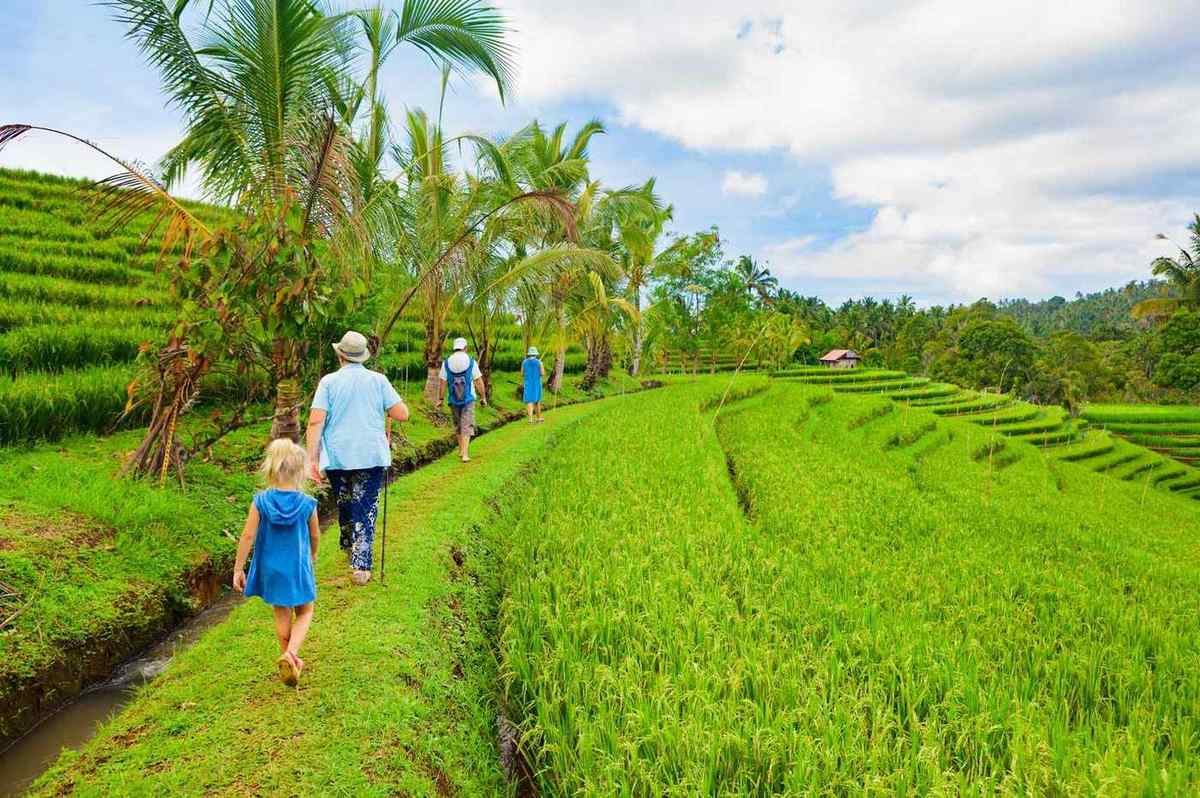
Geography and geology give Indonesia an unusually wide set of landscapes, from the rice country of Java and Bali to thick rainforest across Sumatra, Kalimantan and Sulawesi, then dry grassland through the Nusatenggara islands and snow high on West Papua.
In the north of Sulawesi researchers turned up the coelacanth, a fish so old it is called a living fossil; its line goes back some 400 million years, well before the dinosaurs, to a time when whales made an annual run through these waters up from the South Pole. Age suits the country. Old temples, music that spans court traditions and current pop, dance, ritual and daily habit all shift as you move from one island to the next and one region to another, and the welcome you get is warm enough to stay with you.
Accommodation is a real strength. A number of Indonesian hotels appear regularly on international best-of lists, whether they sit on white sand, look down over a green river valley, or occupy a corner of busy Jakarta.
Jakarta, Bandung, Surabaya and Makassar hum with commerce and nightlife, and shoppers do well at both ends of the scale: designer boutiques on one side, roadside stalls selling local goods on the other. Eating runs from fiery regional cooking to international kitchens, and the spa culture is there when you want to switch off entirely.
Direct international flights reach Jakarta, Bali, Medan, Padang, Bandung, Solo, Yogyakarta, Surabaya and Makassar, while a mix of full-service and budget airlines carries passengers onward to smaller towns and out-of-the-way places.
GOVERNMENT
Indonesia is a republic: its head of state takes office through elections held on a regular cycle. Power is split three ways, into legislative, executive and judicial arms. The constitution drawn up in 1945 draws only a limited line between them, and since 1999 the document has been revised repeatedly. Alongside the national administration, provinces and districts run their own. In practice the system borrows features from both the parliamentary and the presidential model.
The executive takes in a president, a vice-president and the cabinet known as Kabinet Indonesia Bersatu, or United Indonesia Cabinet, plus the officer who commands the country's armed forces.
The legislature has two chambers. One is the Dewan Perwakilan Rakyat, the People's Representative Council, with roughly 550 members. The second is the Majelis Perusyawaratan Rakyat, or People's Consultative Assembly. That two-chamber arrangement dates only from 2004.
The country occupies the water between continental Southeast Asia and Australia, spread across two oceans, the Indian and the Pacific, and no other archipelago nation is larger. Five islands carry most of the land: Sumatra, Java, Sulawesi, Kalimantan, which forms part of Borneo, and Irian Jaya, which covers the western side of New Guinea. Some 30 smaller groups fill in the rest.
Counted up, the archipelago holds roughly 17,508 islands, about 6,000 of which have people living on them, strung out across 2,828km (3,000 miles). Most sit along a volcanic belt carrying over 300 volcanoes, though the majority no longer erupt. Terrain changes with each landfall, running from tall ranges and plateaux down to coastal flats and alluvial plains.
Skies stay bright for most of the year, clouding over once the rains arrive, which is why the dry months make the better window for a visit. Heat and humidity are constant, so pack sunscreen and something to stop your skin drying out. Leave the umbrella at home; they cost very little and turn up in even the smallest shops here. The same goes for any extra clothing you find you need.
Close to 88% of Indonesians are Muslim, which gives the country the world's biggest Muslim population. The constitution guarantees religious freedom all the same, an idea set out in the opening principle of the Pancasila, the state philosophy, which rests on belief in a single supreme God. Christianity, Hinduism and Buddhism are all practised here as well.
Spread over 17,000-plus islands, the population stands at roughly 200 million and takes in upwards of 200 ethnic groups. Since independence came in 1945, marriage across those lines has drawn the country steadily closer together. Islam is the faith of the majority, while Bali is predominantly Hindu. Catholics and Protestants form the larger share in the Minahasa area of North Sulawesi, the Toraja highlands of South Sulawesi, the eastern Nusatenggara islands, much of Papua, the Batak highlands and the island of Nias off North Sumatra. Religion, in one form or another, matters to most people here.