Highlights
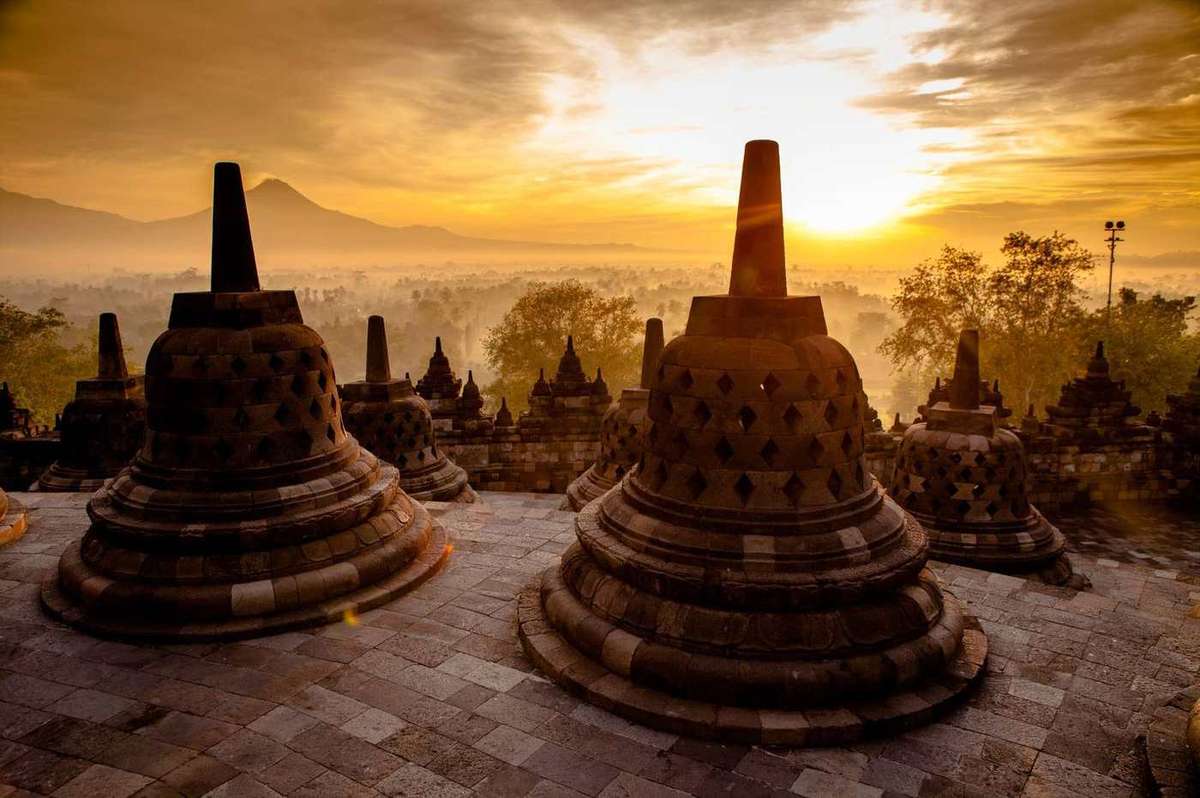
An early start, and the largest Buddhist temple in the world at first light.
Cover the stretch to Yogyakarta aboard one of Indonesia's best-loved trains.
Take the open-air route to the Royal Palace by becak, the local rickshaw, wind in your face.
Walk among clove and cocoa trees at Kalibaru on the Ijen plateau of Java, a volcano behind them.
Tour Details
12 Days / 11 Nights
Departs every Sundays
Trip Grading: Easy
3 - 4 Star Hotels
Includes Daily Breakfasts, 1 Dinner, 8 Lunches
Group Size 16 PAX (Maximum)
Guaranteed Departure with minimum of 4 PAX
Itinerary
Day 1: Arrival to Jakarta
You are met at the airport and driven to the hotel. In the evening, welcome drinks bring the group together and your Tour Leader runs through how the days ahead will work.
Day 2: Jakarta to Bogor
The morning begins on the road, rolling past the National Monument before stopping at the Presidential Palace, the country's political centre and a building full of good art and better architecture. This is where independence from the Netherlands was declared. Inside, you hear about the presidents who lived here and see the rooms they used, then step back to take in the white columns and worked facade of a fine neoclassical design. From there the route runs north to Fatahillah Square, the old quarter of Jakarta in Kota, better known as Old Batavia. In the 16th century, under Dutch rule, this was the centre of the walled city, and it still holds the Jakarta History Museum along with a run of colonial buildings. Nearby lies Sunda Kelapa, the point from which the Dutch began their hold over Jakarta and the wider country. Traces of Kasteel Batavia remain here, the old fort and trading depot the Dutch East Indies Company kept. Sunda Kelapa now works as a fishing wharf and a port for inter island cargo. Afterwards the drive continues to Bogor.
Day 3: Bogor to Bandung
Bogor Botanical Garden came first among Indonesia's botanic gardens and still leads them. Its 87 hectares of trees, shrubs, flowerbeds, lawns and ponds sit inside a city of a million people that keeps growing outward. The garden also carries a long record in research and conservation, work that continues today. Do not skip the orchid house and its 3,000 varieties of that delicate flower. Out of town there is a climb of roughly half an hour up to Puncak Pass, where green hills roll away under tea plantations. A restaurant nearby serves Indonesian dishes to close the outing, after which you are returned to your hotel.
Day 4: Bandung
Bandung once drew the tea and coffee men who owned the hills around it, and the town they built picked up a nickname, Parijs van Java, meaning Java's own Paris. Something of that survives downtown, where Art Deco blocks from the Dutch period still stand and a few kitchens turn out proper beef steaks and bitterballen for anyone who came here to eat. The day starts early with the drive to Ciwidey, climbing past strawberry fields to Situ Patenggang. The lake is quiet, and it turns theatrical when mist slides off the hills and settles over the water. Next comes Kawah Putih, the White Crater, filled with shallow spring water of an almost snowy white. The volcano has not finished: two vents at the far end of the lake still push out pale smoke. The road back to the city runs through more rolling hills and tea estates. The afternoon belongs to Sundanese performance, first wayang golek, the wooden puppet theatre the region is known for, then the angklung bamboo orchestra, with a bamboo concert played by a handful of local children in bright costume who dance as they play.
Day 5: Bandung to Yogyakarta
A short transfer brings you to Bandung station for the executive service to Yogyakarta. The line runs close to the mountains outside the city, so the early stretch is all green. You are met on arrival and taken to your hotel, and the rest of the day is free. Yogyakarta rewards an unplanned afternoon, above all if you like craft: the city is where Javanese art keeps its capital, and a workshop or studio seems to sit on every second street, which makes souvenir hunting genuinely worthwhile. The alleyways and markets are easy to drift through, the mood is unhurried and friendly, and old and new sit beside one another without fuss, ancient forms alongside contemporary work.
Day 6: Yogyakarta
The alarm goes early, because Borobudur belongs to dawn. The air is cool then, and as the mist thins the sun rises over the volcanoes and the terraced fields, catching the carved panels and the many Buddha faces on the stupas. It is an extraordinary hour. Breakfast follows, then Pawon temple, put up somewhere in the 8th or 9th century and thought by some to have served as a burial place for a king. Mendut Temple closes the morning. Javanese who follow Buddhism or the older mystical traditions still come here to pray for particular things, recovery from illness among them. Mendut, Pawon and Borobudur are all Buddhist and all three stand on a single axis. They are clearly linked in ritual terms, though nobody now knows how the rite actually ran.
Day 7: Yogyakarta
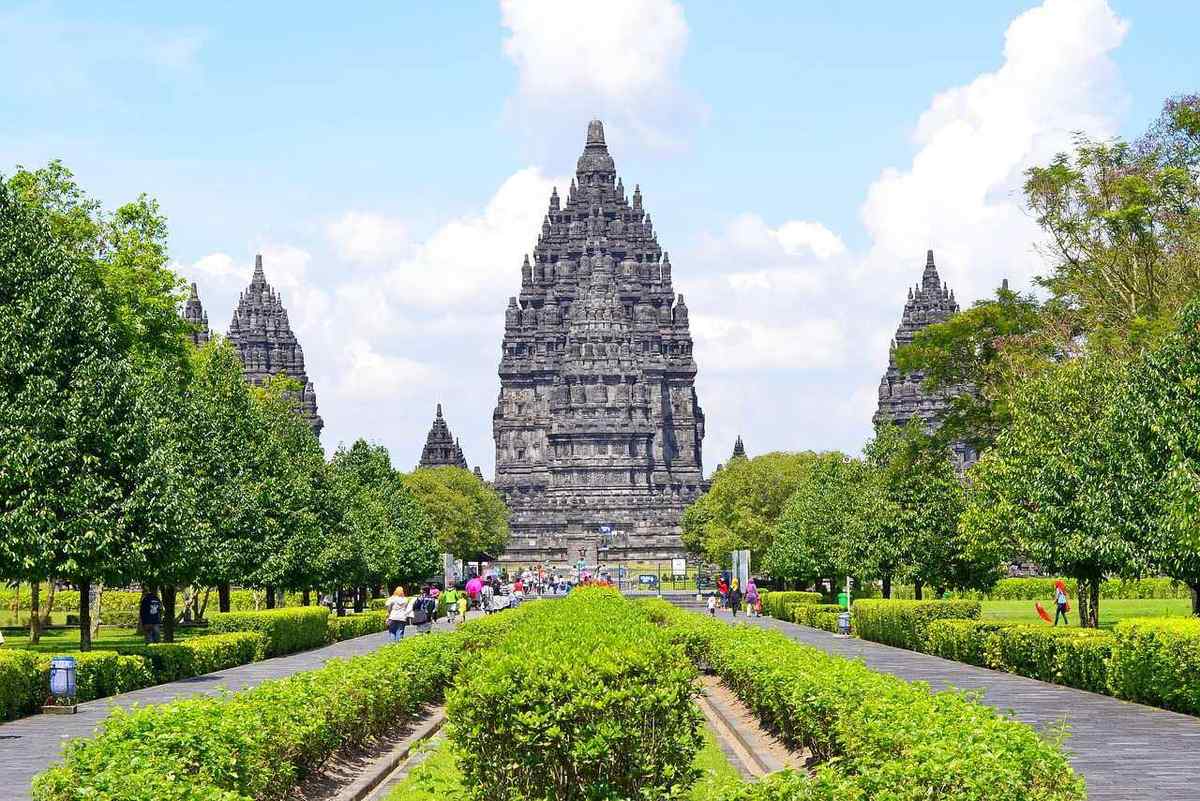
A becak, the three wheeled Javanese rickshaw, opens up a different view of Yogyakarta at street level, close to the noise and the traffic, and you take one to the Keraton, the sultan's palace. Inside the compound you are shown ceremonial dress and the relics and objects the Yogyakarta sultanate has kept over the centuries. From there the bus carries you to Tamansari, the water castle, laid out in the middle of the 18th century as a royal garden. It did several jobs at once: somewhere to rest, somewhere to work, a place for meditation, a defensive position and a bolthole when one was needed. East and west met in the design, and the result is odd, private and full of story. Batik comes next. For Javanese families the cloth is not decoration but inheritance, bound into daily life, culture and what gets passed down, and outside the factories it is still drawn by hand in small workshops. Silver follows at Kotagede, a district on the edge of Yogyakarta whose narrow lanes are packed with one room silversmiths and tiled houses that once belonged to nobles and to merchants of the court. It rewards a slow wander, and it remains the heart of the city's silver trade. Prambanan closes the day, and it is worth holding out for. Raised in the 10th century, it is the biggest complex in Indonesia given over to Shiva. At the centre of the innermost square rise three shrines carved with scenes from the Ramayana, one each for Shiva, Vishnu and Brahma, faced by three more built for the animals that carry those gods.
Day 8: Yogyakarta to Mount Bromo
The train runs as far as Mojokerto. From there a car takes the eastern road through the middle of Java, teak forest and farmland going by for hours, until Mt Bromo. Indonesia sits on the Pacific Ring of Fire and counts 127 active volcanoes; Bromo is the one everybody knows. Its name is the Javanese form of Brahma, the creator god of the Hindus.
Day 9: Mount Bromo to Kalibaru
Departure is at 3.00 am, by jeep, up to Penanjakan on the lip of the Tengger caldera, for one of the most striking sunrises anywhere. From 2,700 m the whole caldera lies open below you, including the grey expanse people call the Sea of Sand. A short way outside the National Park boundary, more viewpoints look straight across at Mount Bromo; at this hour they hand you the images Indonesia is known for. Breakfast waits back at the hotel. After that comes the road to Banyuwangi, roughly six hours of driving, with a traditional meal at a roadside place along the route. Once you reach Kalibaru the afternoon is yours.
Day 10: Kalibaru
Cocoa and clove trees fill the Ijen plateau here, with a volcano standing behind them. The morning is spent among them at Harni's plantation, in the village of Kalibaru, meeting the people who work the land and sitting a while in the tropical gardens. You watch coffee being made and brown sugar being boiled down, and children from the village dance for the group, usually with an invitation to join in. Then Bali. Lunch is taken at a restaurant en route, and the drive runs around five hours by way of Ketapang and the Gilimanuk crossing, past sleepy villages, rice terraces, plantations, orchards and forest.
Day 11: Ubud
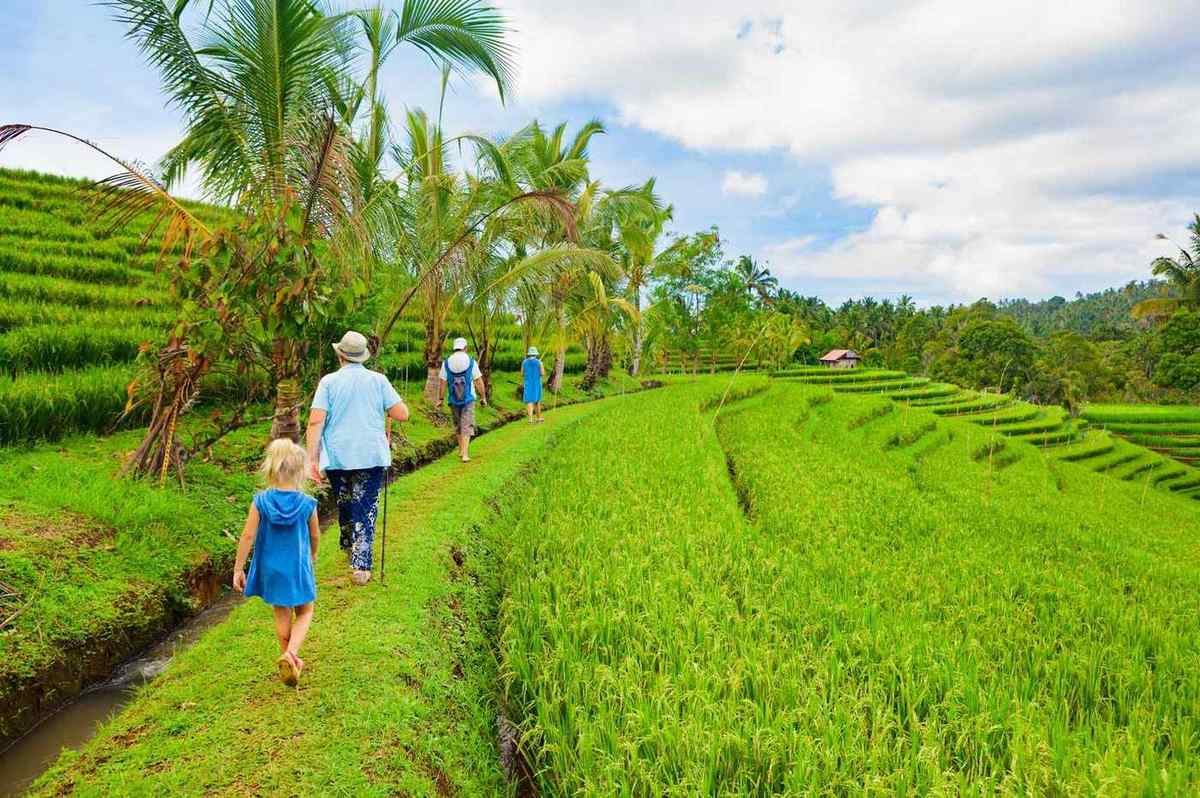
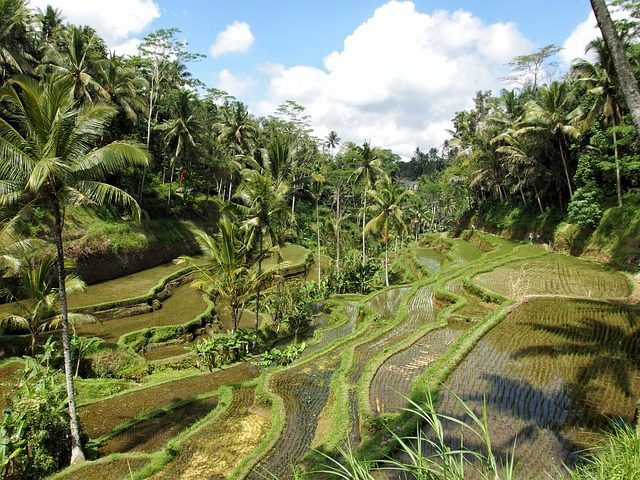
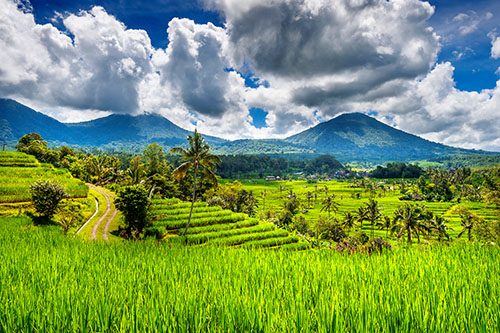
Ubud takes the day. First Tirta Empul, the holy spring temple, tied to an old story of good set against evil and now protected as national heritage. Then Gunung Kawi, the oldest ancient Hindu site in the Ubud area. Lunch, and afterwards the rice terraces at Tegalalang, cut into the valley wall opposite so that the whole slope reads as one picture. Plenty of people come for that photograph, and the crowd does nothing to the valley, which keeps the same timeless air whether anyone is watching or not. The last stop is the Ubud Monkey Forest, right in the middle of town, otherwise called the Sacred Monkey Forest of Padangtegal, where more than 700 long tailed grey macaques live among nutmeg trees, old shrines under heavy foliage and paved walkways. It counts as one of Bali's best known wildlife reserves. A farewell dinner brings the group together in the evening.
Day 12: Departure from Ubudi
Time to leave, though the stories go home with you. A transfer takes you to the airport in good time for your onward flight, and the journey closes there.
What´s included
- 11 nights in described Hotel or similar
- Daily Breakfast for 2 Persons
- 8 Lunches, 1 Dinner
- Air conditioned vehicles throughout, apart from the rickshaw leg
- Small group touring
- All Entrance fees
- English speaking tour leader
- All Tipping
- Arrival and departure transfers
Excluded
- Any Personal Expenses
- Visa fees
- Porters
- Insurance, and personal items: laundry, mini-bar, phone calls and drinks
Get a Quote
This form is not a live booking system. Sending your inquiry does not secure the trip. Our reservations team will reply with availability and prices, and you can go through that proposal at your own pace before you decide to confirm anything with us.