Old sits against new here, the hurried against the unhurried, and Asia against Europe, which gives the place its many-sided character at the centre of Southeast Asia. The country is small and carries far more weight than its size suggests, having grown into one of the world's most energetic and wealthy nations. Its infrastructure is as advanced as any, and its port among the busiest afloat, which puts it firmly on the global map.
Cultures overlap without end, the food runs in every direction, the shopping is first rate and the nights go on. Historic quarters, a thoroughly modern skyline, hotels built with the environment in mind, serious technology: all of it fits on one island. Direct flights connect it to hundreds of cities, which explains its standing as Asia's leading destination for both business and leisure.
Legend gives the founding to a Prince of Sumatra, who called the place 'Singapura', or 'The Lion City'. The first real settlement came in the 2nd century AD under the Srivijaya Empire of Sumatra. From the 16th century through to the 19th, the Sultanate of Johor held the territory.
The modern city dates to 1819 and Sir Thomas Stamford Raffles, who came out representing the British East India Company. Britain claimed the island and built it up into the region's leading trading port. Japanese forces took it during World War II; after their defeat it reverted to British Crown Colony status in 1946. Britain let go in 1963, when the island joined the newly independent Malaysia, but the union lasted barely two years and full independence followed in 1965. Today it is a republic, its parliamentary democracy modelled on Westminster.
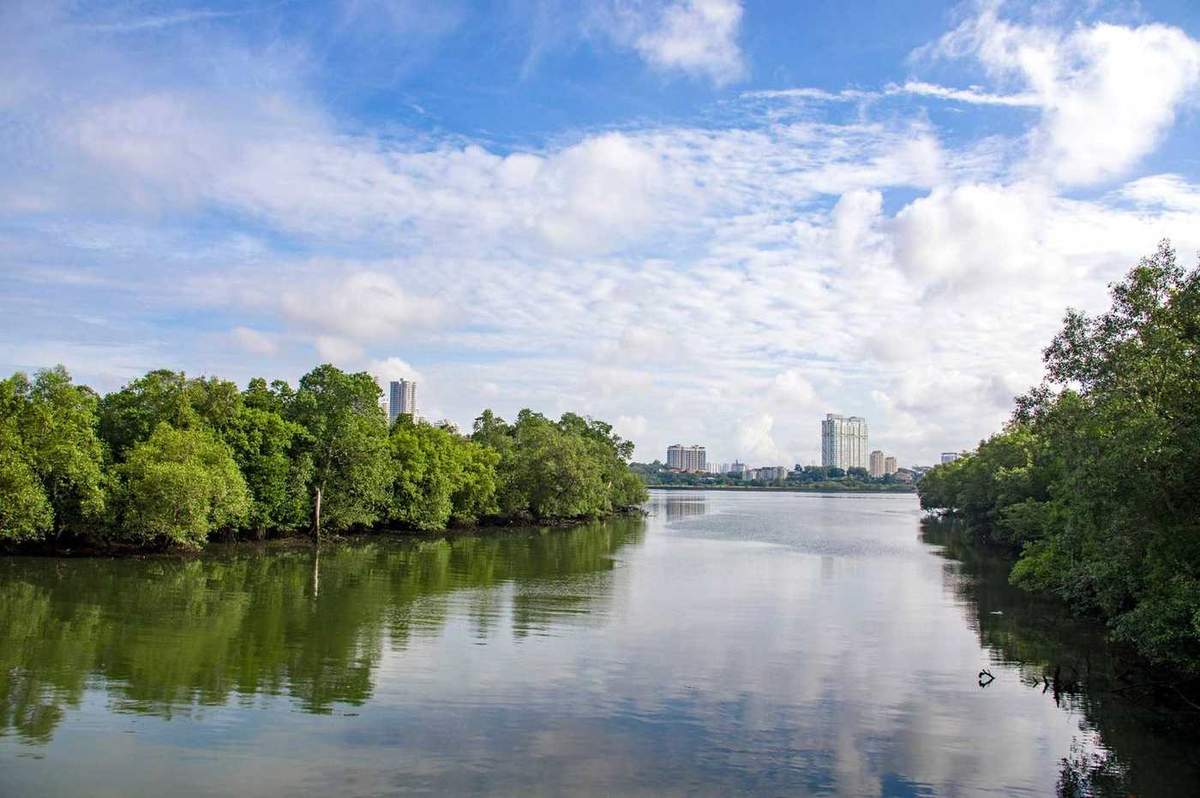
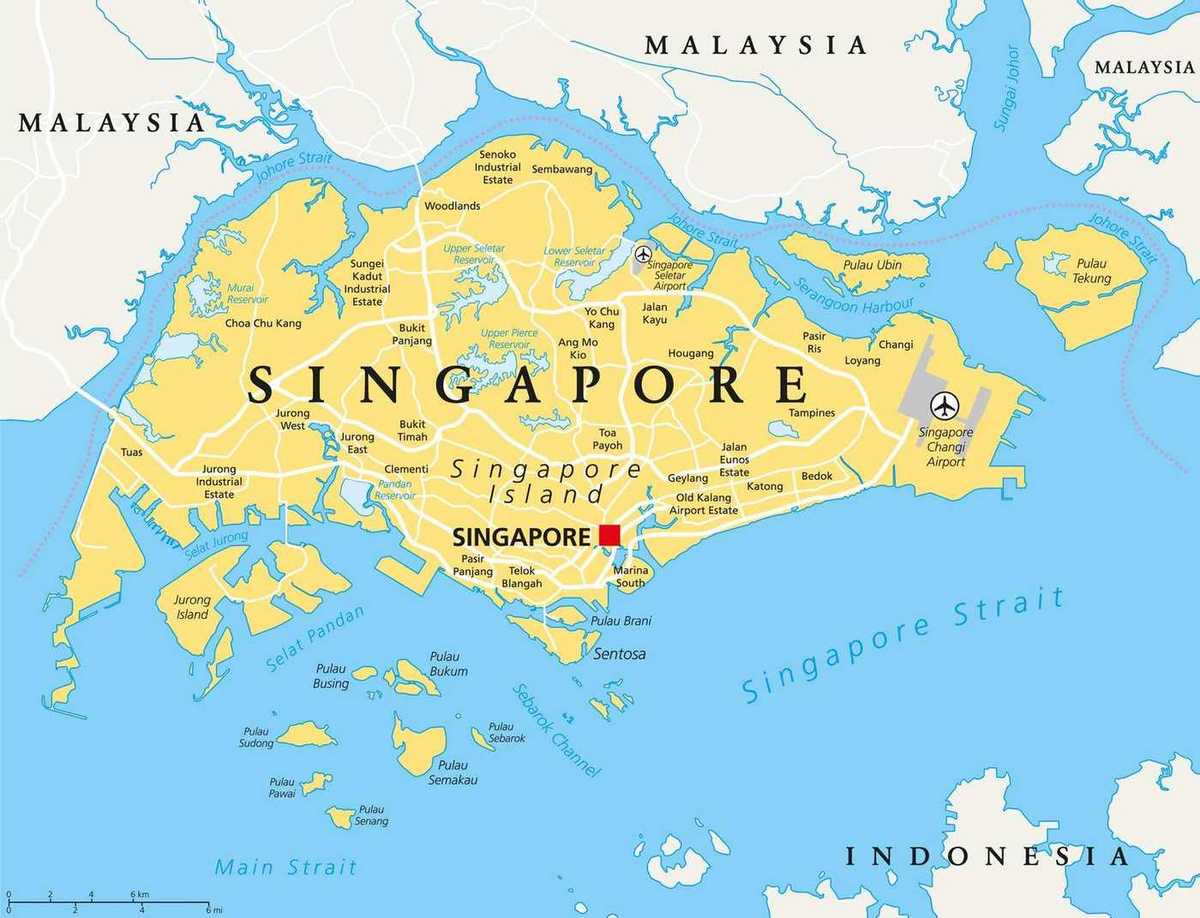
The country occupies the bottom end of the Malay Peninsula, roughly 85 miles (137 kilometers) above the Equator. No border touches another nation: there is the main island itself, plus some 63 islets sitting in its waters. Measured across, the main island runs 26 mi/42 km east to west, and 14 mi/23 km the other way. The ground rolls gently, with only modest hills. Bukit Timah Hill, northwest of the city, is the high point at 540-ft/166-m.
Heat and humidity hold steady the year round, as they do across much of Southeast Asia. Nothing here resembles a season, which is how the 'Land of Eternal Summer' got its name. Daytime readings sit between 31-33 C, dropping to about 23-25C once the sun goes down.
Two monsoons pass through. The North Eastern monsoon, the Dry Season, runs from December until March; the Southwestern, the Wet Season, covers June until September.
Still, with the thermometer barely moving, one 'season' feels much like the next. February through April sits inside the dry period and brings the least rain, the driest air and the most sun.
The state itself is secular, and faiths are given a wide berth to coexist. They cross racial lines readily, and a few have blended in ways you see almost nowhere else.
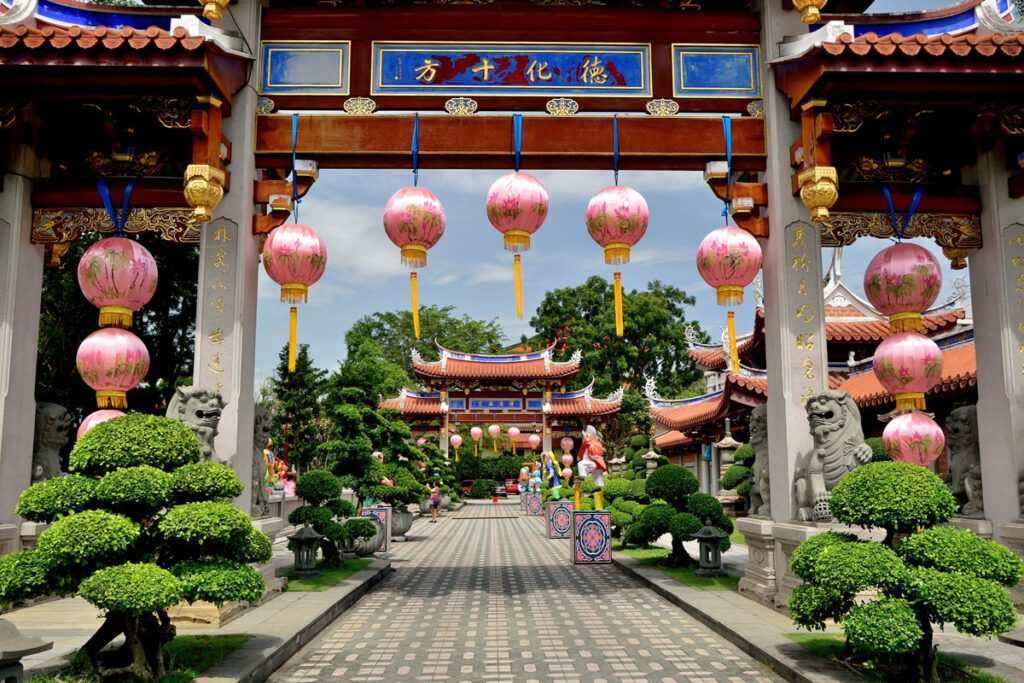
Among the Chinese population you will find Buddhism, Taoism and Shenism alongside Christians and Catholics, plus 'free-thinkers' who follow no religion at all. Malays are Muslim, Indians largely Hindu, though Muslims and Sikhs make up a share of the Indian community too. Old rites and customs play out in plain view, with temples, mosques and churches standing only streets apart. Faith is one of the threads holding this cosmopolitan island together.
Who lives here today is the product of migration in wave after wave, going back close to 200 years, and it makes for a tangled and lively story. Chinese, Malays, Indians and Europeans came, and all of them intermarried.
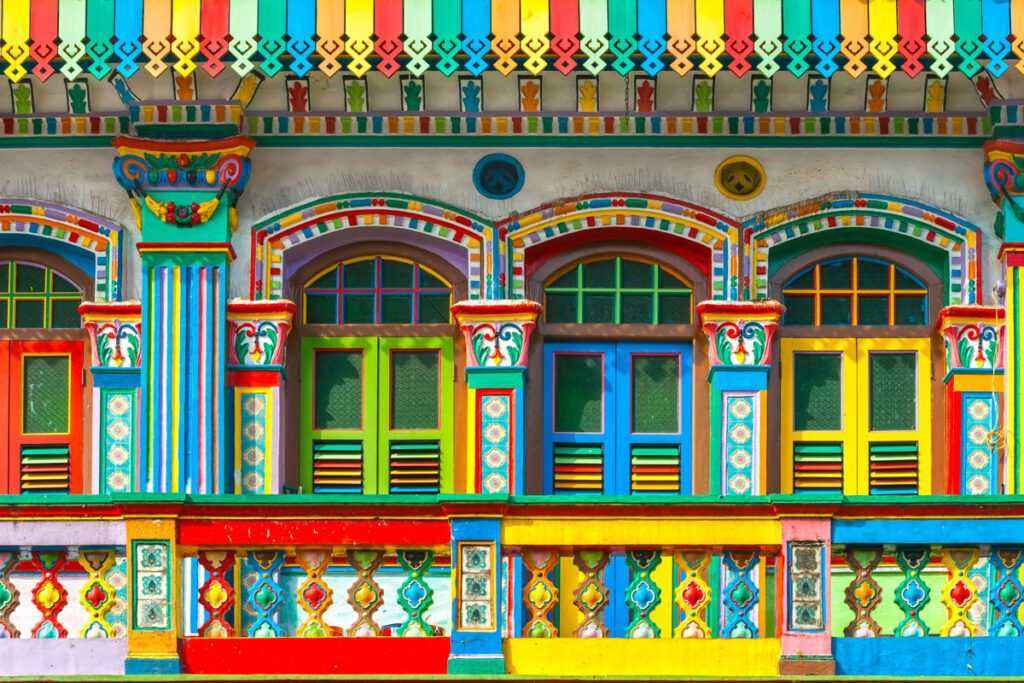
Predictably enough, each group settled its own quarter of the island. The result is a set of colourful neighbourhoods, each wearing one culture's way of life, its history and its traditions openly on the surface, which visitors find absorbing to walk through.
In a place built by newcomers, most people here simply call themselves Singaporean, whatever their race or background.